Saturday, 19 May 2012

Lesson 13: Halloween Army


Plague
A piece is picked randomly using cards or secretly by yourself to be plagued. When  apiece kills it - it is also killed too.


Zombie
The idea here is that a killed piece turns into a zombie (of the same piece type - ie - a killed bishop becomes a zombie bishop). Zombie pieces can not be killed by normal pieces and normal pieces also cannot jump over zombies. Similarly - zombies cannot jump over anything and cannot kill normal pieces. They are a bit like dead weight and clutter on the board - however, if you have more than one zombie piece - you can use one to kill another one of your zombies - which actually reincarnates it as a normal piece again!!(alternatively you could think of ZOMBIES as "Captured" pieces  - - so rather than any piece being "killed" they are "captured" - ready to be freed by a fellow captor).  NOTE: The zombie piece is placed on the square the normal piece was captured as soon as the capturing piece leaves on their next turn.  Similarly, the reincarnated piece is placed on the same square the zombie was captured when the capturing zombie leaves the square.

Cowardly King
This is where your King is not really the King and if it is killed or checked it will not matter - the game will go on. Your true king is masquerading as another piece. Or, put another way, one of your other pieces is the King, although it moves as normal, if it is killed then you lose the game!! Yes - your king may even be a pAWN! -- you cannot choose who your King hides as - or it may start to be predictable after you keep choosing the QUeen! It is chosen at random. You may do this by picking a card at random. King=King (yes - it may simply be the correct piece), Queen=QUeen, Jack=Bishop, 10=Rook/Castle, 9=Knight/Horse, 8=eighth pawn, 7=7th pawn, 6=6th pawn, 5=5th pawn, 4=4th pawn, 3=3rd pawn, 2=2nd pawn, Ace=1st pawn - Players should keep their cards till the end so that when the game is over they can verify they did not cheat and change which piece was king half way through.

Lesson 12: Mini Chess

(Single Player) - The Queen's Dinner Party
This game is played on a 4x4 board (use a quarter of a normal board).  It is not a battle but a peaceful dinner party with laughing and dancing - and so no attacking or killing takes place..only dancing (moving)!  All pieces (except pawns as they are not invited) from both armies are placed randomly onto the 4x4 board (except the other Queen who does not arrive as she did not want to come to her rival's party).  This leaves one empty square in the 4x4 board.

The aim of the game is to get the one Queen to the edge of the board...without killing anyone!

(Two Player) - Baby Chess
The board is a 5x5 grid - using about half the size of a normal army. Pawns at front as per usual and back row is set up as shown. All other rules apply. This game is good for a quick battle or skirmish.

Lesson 18: Visualisation Training

There is a really simple way to improve your visualisation skills fast. Play imaginary chess.
1) Start by doing some simple visualisation exercises like i) visualising one or two plus pieces on given squares and say the colour of that square then ii) visualise pawns on given squares and saying if they can move to the next said square and iii) visualising a bishop on a square and saying if it can move to the next squares said then iv) place a knight on a square and say if it can move to a said square in one move and then v) the same but if it could reach there in 2 moves.
2) Then move onto simple chess puzzles. i) Start by visualising setups with 1 white rook and king vs 1 black king.  ii) then 1 white rook and king vs 1 black pawn and king, iii) then 1 white rook, bishop and king vs 1 black pawn and king iv) then 1 white rook, knight and king vs 1 black pawn and king. v) Then finally moving multiple pieces to solve an end game puzzle in a few moves (you can use the puzzles at the bottom of this blog).
3)Then move onto playing Alice in Wonderland Chess (explained below) which forces you to visualise missing pieces.
4) Then play normal chess but have one side as real pieces and the other as imaginary pieces.
5) then eventually progress to both sides being imaginary and finally do this completely in your mind - without a board

ALICE CHESS
This requires two boards as opposed to only one!
 Game play is as normal - except at the end of each pieces move - it goes through the looking glass and gets transported to the exact same spot onto the alternate reality chess board (the second chess board) and there it remains until it makes another move, at the end of which it gets transported back through the looking glass into normal reality again (the first board!) - - it gets very difficult to keep track

The main thing to remember is that you can only move to a square if you are able to transport though it at the end of the go - if there is a piece occupying the square on the other board (blocking your ability to transport to it) you cannot move there! - - You only 'kill' pieces on your side of the looking glass (on your board) and cannot kill the alternate reality piece (i.e. cannot transport through to the otherside at the end and then kill the piece you land on!)..

this means you can keep your king safe by moving him through the looking glass onto the other board! it also means that it is a lot harder to check the King as you must move into position on the other board so that you transport into the position of check (otherwise if you attempt to check him on the same board - you will simply transport to the alternate board at the end of your move and so the King will not be in check - you can not check THROUGH the looking glass!!) 

WHAT IF I DON'T HAVE TWO CHESS BOARDS!!
If you dont have two chess boards - then this game can be modified slightly to be played on two halves of one board - imagining a giant mirror inbetween the two halves of the chess board!

Of course - this means there is less space to set up your army (4 squares wide as opposed to 8 squares) -
so to compensate each army will start in THREE rows instead of the usual two -
the front row will consist of 4 pawns (not 8), the second row will have your semi-precious pieces: knights on the outside and bishops in the middle, and the back row will have your rooks on the outside protecting the King and queen on the inside. - Remember - at the end of each move - the piece is transported to the same spot on the alternate side of the board! enjoy

PRACTICE: 1) play alice chess - both armies starting in normal reality (same board).  2) play alice chess - one army starting in alternate reality / wonderland (one army starts on the second board). 3) play alice chess with a third chess board - so there are three possible worlds - and you have the option of which board you teleport to!

Lesson 9: Special Rules: the Pawn

En Passant
We have already seen that our pawn can move two squares on its very first move (as opposed to its ordinary One).
 But lets suppose that an enemy pawn does this and if it hadn't (i.e. it only moved one square forward) - he would have been in the diagonal forward position - in place for your pawn to kill him (but since he moved two he is not diagonal from your pawn but beside him - so not in a position to be killed). In this rare case - your pawn may still kill the enemy pawn as if it were diagonally in front (even though it is actually besides) and so your pawn moves into the diagonal forward position killing the enemy pawn besides him as he passes!

Promotion

If a pawn ever makes it to the opposite side of the board (i.e. the enemies starting side) - then it gets promoted!!! You can change the pawn into any other piece that you like (apart from a King) - but it could become a Queen for example!! so you COULD have 2 queens - or 9 if you got all pawns there safely!! how amazing is that!

PRACTICE: 1) Set up the board as normal - with one slight exception - all of YOUR pawns are where your opponents' pawns should be, and all your opponents pawns are where your pawns should be - one step away from getting a promotion! and right infront of your major pieces! - this set up is called Upside-down Chess! 2) Set up the board as normal - except pretend all your pieces are pawns (16 pawns) and your enemy is as normal.  You have no king - so you lose when all your pieces die. Then swap round with your partner. 3) This game is called peasants revolt - The white team are the peasants: they have a King and 8 pawns. The black team are the nobles: with a King, a pawn and FOUR knights. The additional knights should be placed where the bishops would be. The single pawn should be infront of the King.

Lesson 11: Antichess

The game is played with all the rules we have learnt and from the normal start position - the only difference this time is the AIM of the game!!

Rather than trying to Kill the King - in this variation you don't care if the king is killed. In fact - you don't care if any piece is killed. The AIM of Antichess is to get rid of all your pieces - the one to have their whole army killed first is the winner!!

(note: if you are in a position to kill an enemy piece - you no longer can choose - you MUST kill them).

PRACTICE: 1) Play Antichess! 2) Play Antichess...but you must make it so your King is the last to die!

Lesson 10: Special Rules: the King

Castling
This is a special collaboration between your Rook and the King.  In order to use this move - you must NOT have moved your rook or King from their original starting positions yet. (i.e. the rook in the corner of the board and the King in the middle). In your go - you move your king TWO squares towards the rook (as opposed to its usual one) and then the rook moves past the King to his other side for protection. In essence - they have swapped sides with each other (and thats right! this is the only move that requires TWO pieces to move!! a truly special move)

This move is usually good to use if your king is in danger in its current position and needs to get out quick. (remember - it can only be used if your King and Rook are in their original positions - - not if they've moved about the board)


PRACTICE: 1) play a full game. 2) Use a special type of random starting set up: the pawns are as normal but all the major pieces are put on the back row in random order!  (the opponents army could either mirror your random set up - or you could both have your own random set ups) - - important to note you can not use castling in random set ups unless the rook and king are in their normal start positions.

Friday, 18 May 2012

Lesson 8: Playing a Full game of chess

The board - always start so that a white square is on the bottom right hand corner (white to the right).
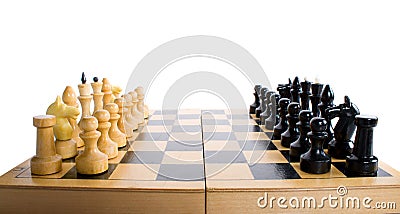
Every piece in chess has its own starting position. Typically - both teams start on opposite sides of the board. The pawns line up in the front row of each army.

In the back row you have the rooks guarding the outer edges, followed by the knights who are the next ones in, then the bishops who always stay close to the King and Queen in the middle. (Note: the Queen goes on her own coloured square - i.e. a Black Queen will go on the black square and a White queen will go on the White square. This is important as it means that both Kings and Queens on each team are facing directly across from each other).
To decide who starts - try holding a pawn from each side - one in each hand - Then ask your opponent to pick a hand to decide which team starts.

TIPS:
I have two pieces of advice for all beginners of Chess:

1) Your best strategy in Chess is Attack, Attack, Attack (every move you make is valuable and should be done for some sort of attack - dont waste time making lovely patterns or retreating without a plan in mind - except as a last resort)

2) Make effective use of Wait time. This is not the time to relax but it is the time to plan your moves. (when it is your turn you should not really give your enemy lots of wait time so they can plan - it should be quick because you have already planned.)
  1. Immediate Defense/Attack (this means protecting any piece from being killed by your opponent in their next turn - check for pieces in lines of attack. The main ways to protect pieces are to reposition them somewhere else or to block the line of attack with another piece. The better way to protect your piece is by attacking - the best defense is attack! This could be by taking out enemy piece who is about to kill your piece. It could also be by positioning another piece in a place to kill another piece of the opponent that is just as or more valuable than your piece so that your opponent will be reluctant to kill your piece at the cost of losing theirs on the next go - they may rethink their plan of attack and your piece will be saved for now)
  2. Short Term Attack (this is any form of attack to kill a piece that will require more than one move to execute - perhaps even more than one piece being moved. the options here are many and varied and is where the real fun of chess lies)
  3. Long Term Attack (never lose sight of the overall aim of chess - to kill the King! sometimes players can get so caught up in a mini battle happening on the board only to find that the enemy has been using this distraction to position their pieces in place to get your king in checkmate - so all your mini victories of killing their Rook or Queen has been a waste - as your King is dead! - make sure you always have in mind a long term plan of attack on the enemies King - make it as efficient as possible - i.e. if you can kill the King without killing any other enemy piece all the better (in fact, a good chess player is not simply measured on how few pieces they lose and how many enemy pieces they kill - but the best chess player will be the one who kills as few of the enemy pieces as possible to win the game (of course without having any of their pieces killed either).

PRACTICE: 1) Play a full game with all the pieces and use their proper starting positions! 2) If you want to practice more but do not have enough time for a full match - play using points - so the game could end at any time but the person who has the most points at that moment is the winner - use the relative values of each piece you have captured / killed *(e.g. a pawn = 1, knight = 2, Queen = 20, etc) to count up how many points you have by the end.  3) Want to practice but have no one around to play with? There is a link at the bottom that will let you play for free online - or alternatively you could play a 1 player chess game - Use the daily puzzle at the bottom of the page to suggest a challenging starting scenario - then see how many turns it takes for you to win!